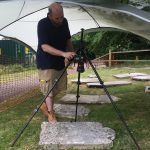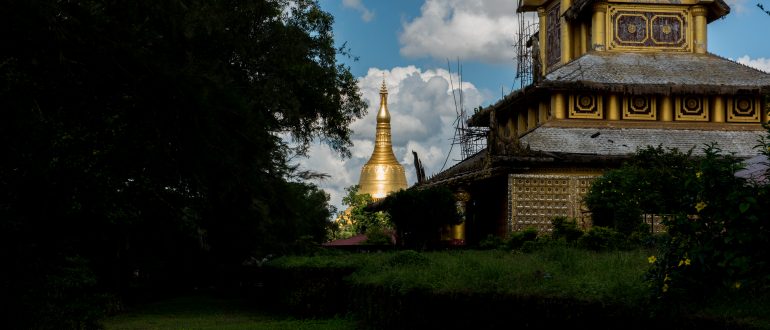
In November 2016, Archaeovision undertook a programme of digital imaging in support of two parallel research projects examining the inscriptions and material culture associated with the Pyu urban tradition of Myanmar. The work formed a technical contribution to both the Pyu epigraphy sub‑project (PI: Nathan W. Hill, SOAS University of London) within the ERC Synergy…
Posts Tagged:photogrammetry
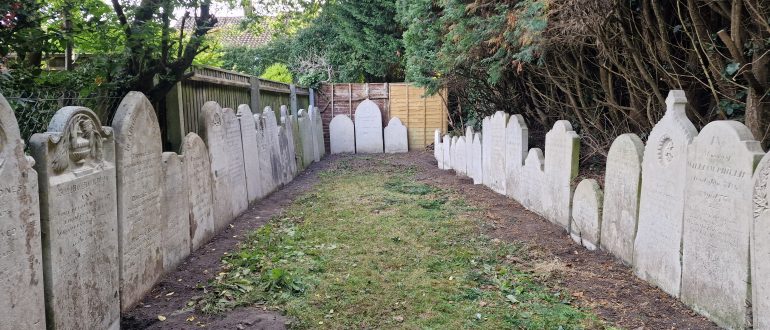
In August 2024, Archaeovision undertook a detailed programme of Reflectance Transformation Imaging (RTI) and photogrammetric recording at the former Methodist chapel burial ground in East Boldre, New Forest. The survey focused on a group of historic headstones that had been re-erected in a vertical position, many of which exhibited advanced surface erosion and reduced inscription…
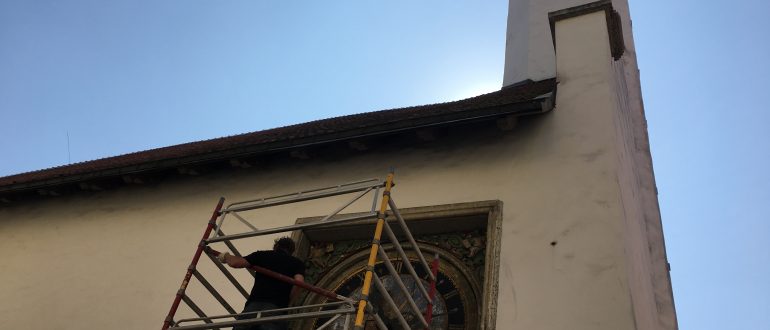
We recently oversaw the high resolution photogrammetry survey of the clock at the Church of the Holy Spirit, utilising a scaffolding system in front hundreds of tourists, and falls within our overall Ackerman project. More on this clock can be found on the Ackermann project blog and we will provide more on the result soon.
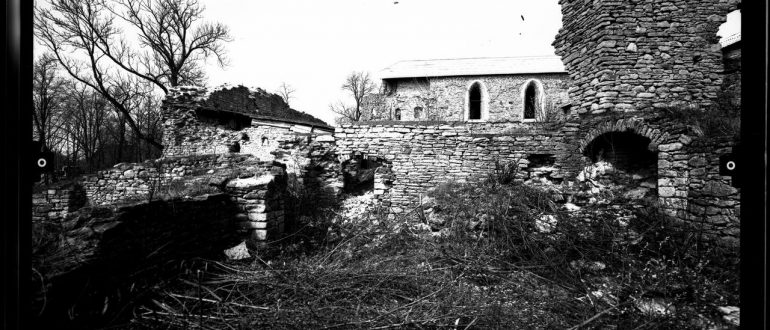
At the beginning of September, Archaeovision together with Euro G.V. (Czech Republic) started a collaborative project with the Estonian Heritage Board Archive to re-use and re-purpose glass plate negatives. During the project we are assessing the condition of the glass plate negatives, digitising and re-using the captured content through digital imaging processes to create photogrammetric…
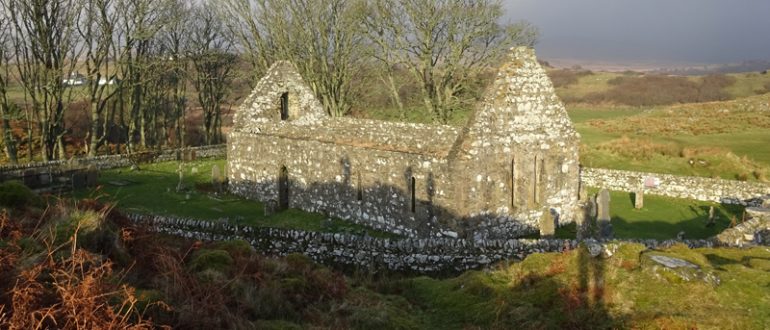
In February of this year, Archaeovision were hired by Islay Heritage, under the guidance of Professor Steven Mithen, the Deputy Vice Chancellor of Reading University, to create an interactive virtual reconstruction of Kildalton Chapel based on its original form. The work incorporated laser scanning, geophysics, aerial drone photography, photogrammetry, 3D modelling and webGL conversion. Kildalton Chapel is…
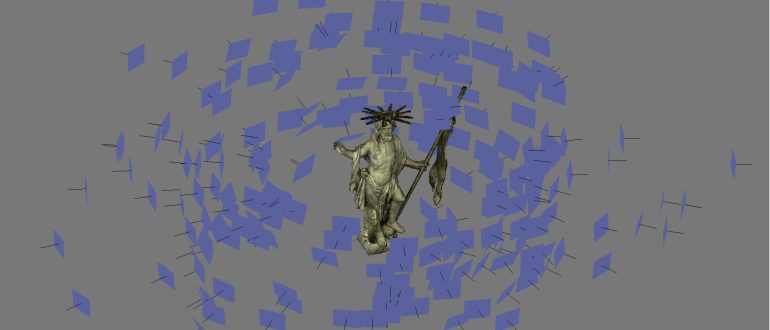
Since mid-November Andres Uueni has been involved in a project called Christian Ackermann – Tallinn’s Pheidias, Arrogant and Talented at St Mary’s Cathedral, Tallinn. The Project leaders for this project are the Estonian Academy of Arts and the Estonian Art Museum The objective of the project was to rescue Christian Ackermann, the most scandalous and talented carver of Estonia’s Baroque…

Over the next few weeks, in collaboration with SOAS University of London, the École française d’Extrême-Orient and The University of Sydney, Archaeovision will be conducting a number of different recording processes in Myanmar (Burma), including RTI, photogrammetry, high-resolution photography and multi-spectral imaging. The aim of this visit is to improve and increase the number of detailed…
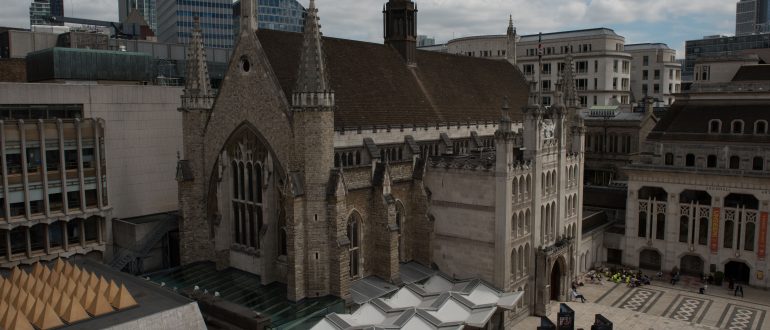
During the summer, Archaeovision took part in the UAV photogrammetry survey of the Grade I listed Guildhall building in the City of London. The purpose of the survey was to produce a condition survey report of the ceremonial and administrative centre of the City of London and its Corporation. The construction of the Guildhall began in…
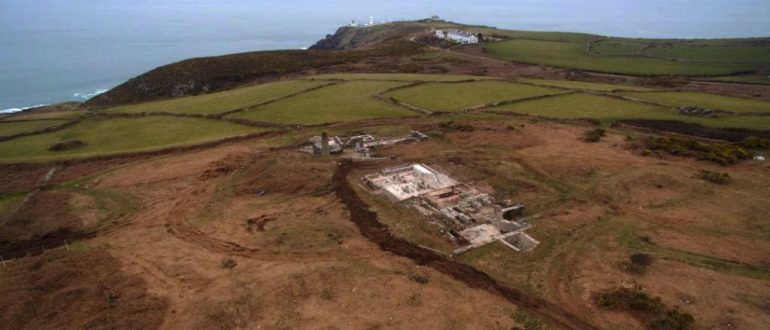
Earlier this year Archaeovision completed a landscape photogrammetry survey of North Boscaswell Mine, Pendeen, Cornwall for the National Trust. North Boscaswell Mine worked for little more than a decade from 1906 and incorporates the remains of the only known Merton Furnace to survive in Britain. The mine was small-scale with 11 men being employed underground and…
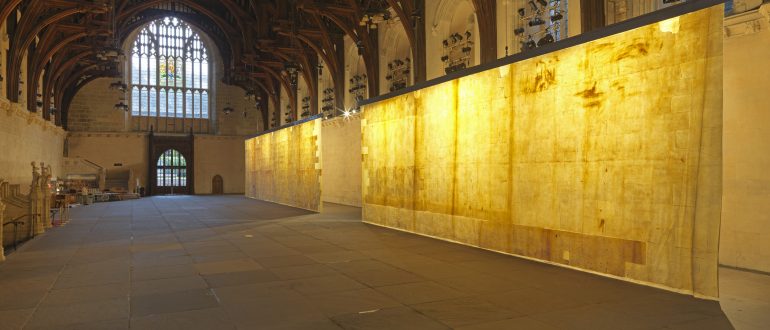
Last year Archaeovision were contacted by Artangel in regard to their Ethics of Dust project. The Ethics of Dust is a major temporary site-specific artwork of Westminster Hall, the oldest part of the Houses of Parliament, home of the UK’s House of Commons and House of Lords. A 50 metre long translucent latex cast of the hall’s internal and…
- Digital Imaging for Pyu Epigraphy: RTI and Photogrammetry for the Pyu Corpus
- RTI and Photogrammetric Recording of the East Boldre Methodist Chapel Gravestones
- Unlocking Ancient Voices: New Insights from the Vindolanda Stylus Tablets
- Preserving culture and heritage on the digital age

- Step by Step: RTI at St Michaels and All Angels Church, Lyndhurst