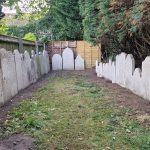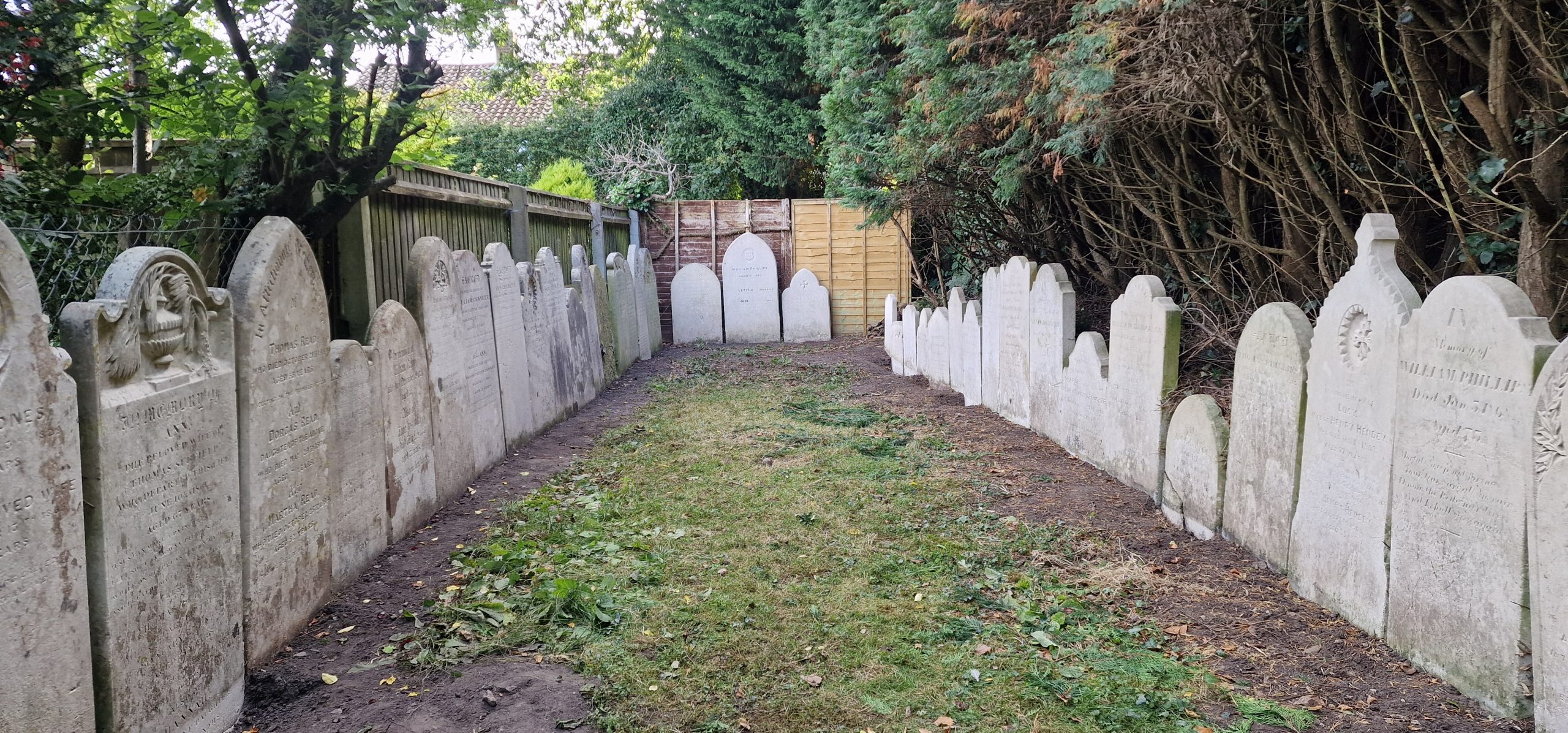
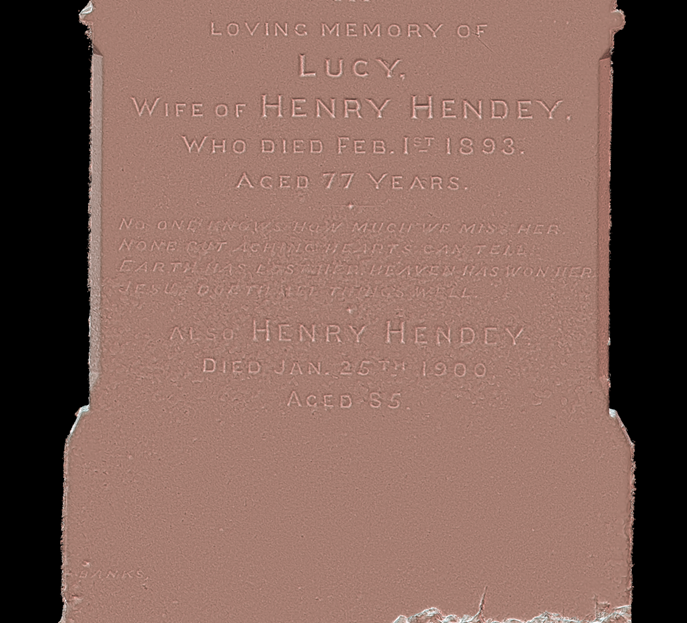
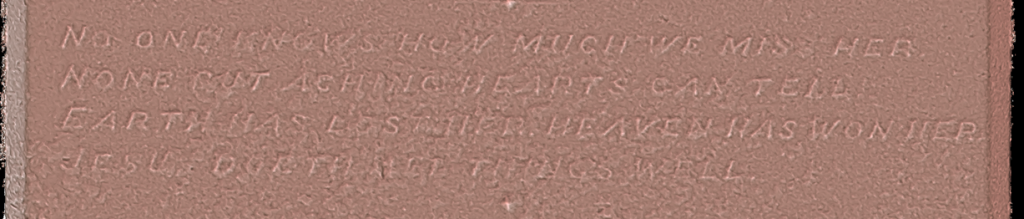
In August 2024, Archaeovision undertook a detailed programme of Reflectance Transformation Imaging (RTI) and photogrammetric recording at the former Methodist chapel burial ground in East Boldre, New Forest. The survey focused on a group of historic headstones that had been re-erected in a vertical position, many of which exhibited advanced surface erosion and reduced inscription legibility.
The project was designed to create high-resolution, non-contact digital records that would both enhance the readability of inscriptions and provide a long-term, accessible archive for the local community.
Reflectance Transformation Imaging (RTI)
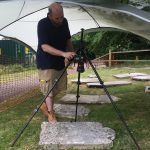
RTI is an image-based recording technique that captures subtle surface variation by photographing a fixed subject under multiple, precisely documented lighting positions. For the East Boldre survey, highlight RTI was employed, a method well-suited to field conditions and larger monuments where dome-based systems are impractical.
Each gravestone was recorded using a fixed camera position, an external movable light source, and a reflective sphere positioned parallel to the stone. Changes in the reflected highlight on the sphere allowed the precise calculation of light vectors during processing. This approach enabled the capture of raking-light effects that are particularly effective at revealing shallow incised lettering and surface tooling.
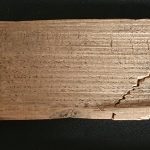
These high-resolution datasets allow users to interactively relight the surface, apply rendering enhancements, and isolate surface detail that is often invisible under static lighting conditions.
RTI example of Stickland headstone
Photogrammetric Recording
To complement the RTI datasets, structure-from-motion photogrammetry was used to generate metrically accurate three-dimensional models of each gravestone. The method involved capturing a dense series of overlapping photographs around each monument, ensuring sufficient coverage, controlled lighting, and consistent focus to prioritise surface geometry over purely visual texture.
The resulting models provide an accurate record of the stones’ form, condition, and surface morphology as recorded in 2024. When used alongside RTI, the photogrammetry allows both spatial analysis and enhanced inscription study, combining three-dimensional geometry with advanced surface visualisation.
East Boldre Chapel Headstone 52 by Archaeovision on Sketchfab
As our recording methodology prioritises metric accuracy rather than textural detail—typically used to produce visually pleasing models—our 3D datasets are particularly well suited to examining fine surface features.
Integrated Digital Access
A key outcome of the project was the integration of all datasets into a publicly accessible online platform, developed in collaboration with the local community. All recorded gravestones are now available via the East Boldre Community Stores website, where each entry includes:
- Standard photographic imagery
- An interactive slider comparing pre-RTI and RTI-enhanced views
- A fully navigable 3D photogrammetry model
- Transcribed text of the inscriptions found
This approach allows users to explore the monuments at multiple levels, from simple visual comparison to detailed surface analysis.
An example record can be viewed here: https://www.eastboldrecommunitystores.com/16
Recording also incorporated the box tomb of Benjamin and Ann Biddlecombe
Community Engagement and Digital Preservation
Beyond technical recording, the East Boldre project demonstrates how advanced imaging techniques can directly support community-led heritage initiatives. By making the data freely available and easy to explore, the project enables descendants, local historians, and researchers to engage with the site in ways that would not be possible through physical access alone.
The digital archive preserves not only the inscriptions themselves but also a record of their condition at a specific moment in time, ensuring that future generations can continue to study and interpret these monuments even as the physical stones continue to weather.
Archaeovision and Digital Heritage Practice
This project reflects Archaeovision’s ongoing commitment to applying cutting-edge, non-invasive recording methods to historic monuments, while ensuring that the results are meaningful and accessible beyond academic or professional audiences. By combining RTI, photogrammetry, and open dissemination, the East Boldre survey provides a model for how technical documentation can be used to strengthen community engagement and long-term heritage preservation.